
The US Food and Drug Administration's (USFDA)'s new draft guidelines aimed at speeding up and reducing the cost of developing biosimilars - lower-priced, near-replicas of complex biologic medicines - could significantly benefit Indian biotech companies.

A five-month-old girl has died in Chhindwara district in Madhya Pradesh allegedly after consuming an Ayurvedic cough syrup and a medicinal powder, an official said on Friday.

'Indian markets may underperform global peers for the next two quarters.' 'But beyond that, India should catch up and resume its long-term growth path.'

Uttar Pradesh Chief Minister Yogi Adityanath on Monday strongly rebutted allegations by Leader of Opposition Mata Prasad Pandey over 'deaths' allegedly due to the consumption of fake medicines and codeine syrup, asserting in the Assembly that no such case has come to the notice of the state government so far.
Around six weeks ago, Sun Pharmaceutical Industries, India's largest drugmaker, suffered a setback, which led to a selloff in the share. The US District Court of New Jersey granted Incyte's request for a preliminary injunction against Sun Pharma's launch of Leqselvi, a drug that treats alopecia.

From the Sensex firms, Adani Ports, NTPC, Power Grid, HCL Tech, Tata Steel, Sun Pharma, Trent and Asian Paints were among the major gainers. However, Bharat Electronics, Eternal, Mahindra & Mahindra and Maruti were among the laggards.

Among Sensex firms, Bajaj Finserv, Bajaj Finance, Tata Steel, Reliance Industries, Sun Pharma, Tata Motors Passenger Vehicles, Axis Bank and Infosys were among the major gainers. Bharti Airtel and Asian Paints emerged as the laggards from the pack.
The Rajasthan government has suspended the state drug controller and halted the distribution of medicines manufactured by Kaysons Pharma following reports of children's deaths allegedly linked to contaminated cough syrup.

From the Sensex pack, Asian Paints, Tech Mahindra, Tata Consultancy Services, Bajaj Finserv, Adani Ports, HCL Technologies, Bharti Airtel, Infosys, Trent, Reliance Industries, UltraTech Cement, Sun Pharmaceuticals, Eternal, Titan and Bajaj Finance were the gainers. On the other hand, Tata Steel, Tata Motors Passenger Vehicles, Tata Motors Commercial Vehicles, Bharat Electronics, Kotak Mahindra Bank and PowerGrid were the laggards.

The platform has seen a growth of 70% in watch time for South content, which is more than the national average.The South has outperformed the rest of India in subscription depth, retention and connected TV adoption.

So far this year, the rupee has fallen by 4.2 per cent, the worst among its Asian peers.

Among Sensex firms, Tata Motors, Mahindra & Mahindra, Bharat Electronics, UltraTech Cement, Trent, Sun Pharma, Power Grid and Reliance Industries were the major laggards. However, Titan, Infosys, Tata Consultancy Services, HCL Tech and Tech Mahindra were among the biggest gainers.
The tailwind of low price erosion in the US generics market, seen by domestic pharmaceutical companies in calendar year 2023 (CY23), may be reversing slowly, caution analysts. According to the latest data from US-based Centers for Medicare and Medicaid Services (CMMS), price erosion in calendar year 2024 (CY24) on a year-to-date (YTD) basis stood at a high of 15 per cent in the oral solid dosage (OSD) segment compared to a low of 1 per cent in CY23. This erosion, according to a report by Antique Stock Broking, was the highest in the last three years.

New Delhi-based pharmaceutical major Mankind Pharma is poised to take pole position in women's health portfolio in the India Pharma Market (IPM) after completing the Rs 13,630 crore deal to acquire Bharat Serums and Vaccines (BSV), senior company officials said. The deal potentially opens doors for Mankind Pharma to the overseas markets, which currently draws 92 per cent of its revenues from India. The combined entity will draw around 13 per cent revenues from the international market, with the remaining coming from the domestic market.

Prime Minister Narendra Modi will host Russian President Vladimir Putin for a private dinner and summit, focusing on defence, trade, and geopolitical issues, including the Ukraine conflict and the impact of US sanctions.
Pharma major Cipla Ltd on Thursday reported a 3.7 per cent rise in consolidated net profit at Rs 1,353.37 crore for the second quarter ended September 30, 2025. The company, which had posted a consolidated net profit of Rs 1,305.01 crore in the second quarter of the last fiscal year, said its managing director & global CEO, Umang Vohra, has decided not to seek re-appointment upon completion of his current term on March 31, 2026, Cipla Ltd said in a regulatory filing.

A Russian missile struck a warehouse belonging to an Indian pharmaceutical company, Kusum, in Ukraine, according to the Ukrainian embassy in India. The embassy alleged that Russia, despite claiming a "special friendship" with India, deliberately targeted Indian businesses in Ukraine. The strike reportedly destroyed medicines intended for children and the elderly. This incident follows a similar attack on a major pharmaceuticals warehouse in Kyiv, which was destroyed by Russian drones, as reported by the UK's ambassador to Ukraine. Kusum Healthcare, the company whose warehouse was hit, has a presence in 29 countries, including Ukraine. This attack comes amidst ongoing tensions in the region as Russia continues its offensive against Ukraine, despite US efforts to push for a ceasefire. Ukrainian Foreign Minister Andrii Sybiha accused Russia of being the sole obstacle to peace and claimed that Moscow rejected a US-brokered proposal for a ceasefire.

When Chennai-based Wedding Designer Ambika Gupta first received a brief for a destination wedding in Udaipur, she had no idea it would turn into one of the most high-profile celebrations of the season.

Harrowing scenes unfolded at the SEZ where the fire ripped through the pharma company. Injured workers with torn clothes and bleeding injuries were seen being shifted to hospitals in ambulances.

Russian President Vladimir Putin arrived in New Delhi for a two-day visit focused on strengthening ties with India, including defense cooperation and trade, amidst a changing geopolitical landscape.

Investors who constantly hop between 'top-performing' funds often end up earning far lower returns than the very funds they invest in -- simply because they enter late and exit early. Best investors don't chase returns, they chase discipline, says Ramalingam Kalirajan.

Tata Sons, now debt-free, has asked the RBI to drop its 'upper-layer NBFC' tag and allow it to stay private.

The Maharashtra Food and Drug Administration (FDA) on Monday appealed to the people to immediately stop the sale or use of a specific batch of Coldrif syrup, following child deaths in Madhya Pradesh and Rajasthan allegedly linked to the medicine.
There is a need to incentivise R&D investments, offer corporate tax concessions and establish an effective intellectual property rights regime in order to push the growth of domestic pharmaceutical industry, as per the industry bodies. Outlining the sector's wish list for the upcoming Union Budget, Organisation of Pharmaceutical Producers of India (OPPI) Director General Anil Matai urged the government to explore methods to incentivise R&D investments, such as deductions on R&D expenses, research-linked incentives for MNCs, and corporate tax concessions.

The death toll from contaminated cough syrup in Madhya Pradesh has risen to 22, with two more children succumbing to kidney infections. An investigation is underway, and arrests have been made.
Among Sensex firms, Hindustan Unilever dropped the most by 3.20 per cent. UltraTech Cement, Kotak Mahindra Bank, Adani Ports, Titan, HDFC Bank and Axis Bank were also among the laggards. However, Bharti Airtel, ICICI Bank, Bharat Electronics and Sun Pharma were among the gainers.

Among Sensex firms, NTPC, Axis Bank, Power Grid, Bharti Airtel, Eternal and Sun Pharma were the major gainers. However, Infosys, Titan, UltraTech Cement and Hindustan Unilever were among the laggards.

After a year of modest returns, equity investors may anticipate gains of 10-15 per cent in Samvat 2082, which began on October 21. Although valuations have moderated from their peaks a year earlier, they remain above long-term averages, potentially limiting sharp upsides.

With several $500 million-plus deals in the pipeline -- including ICICI Prudential AMC, Lenskart, PhonePe, Groww, PhysicsWallah, Meesho, Pine Labs, and Zepto -- investment bankers look poised for another year of hefty bonuses in 2025.
Among Sensex firms, Maruti, Axis Bank, Larsen & Toubro, ICICI Bank, Bharti Airtel, Infosys, Adani Ports and Hindustan Unilever were the laggards. However, Titan, State Bank of India, Eternal and Trent were among the major gainers.

Among Sensex firms, HCL Tech, ICICI Bank, Titan, Trent, Kotak Mahindra Bank, Hindustan Unilever, Mahindra & Mahindra and HDFC Bank were the major laggards. However, Adani Ports, Bharti Airtel, SBI, NTPC and Sun Pharma were among the gainers.

The bumper rise is due to the rising demand for the drug and patients' gradual shift towards its higher dosage.
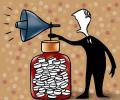
India's healthcare and pharmaceutical sectors raised Rs 14,811 crore through initial public offerings (IPOs) in 2024, the largest since 2019, driven by strong domestic demand amid expanding global opportunities. According to data, key contributors to the record fundraising included Sai Life Sciences (Rs 3,043 crore), IKS Health (Rs 2,498 crore), and Sagility India (Rs 2,107 crore).

Among Sensex firms, Eternal, Sun Pharma, Infosys, HDFC Bank, HCL Tech, Hindustan Unilever, Power Grid, ITC and Adani Ports were the major gainers. However, Tata Motors, Trent, Bajaj Finance and Asian Paints were among the laggards.
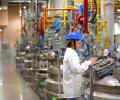
Indian pharmaceutical companies have made major strides in adhering to stringent US Food and Drug Administration (USFDA) norms in 2024, with data suggesting a decline in the number of adverse classification outcomes of inspections across biologics, drugs, and devices. In 2023, the USFDA conducted 225 inspections, which led to 18 cases of Official Action Indicated (OAI) and 117 cases of Voluntary Action Indicated (VAI).

The Enforcement Directorate (ED) raided premises linked to Sresan Pharmaceuticals, the manufacturer of Coldrif cough syrup linked to the deaths of children in Madhya Pradesh and Rajasthan, and top officials of the Tamil Nadu FDA as part of a money laundering investigation.

A student from Jammu and Kashmir studying at a pharmacy college in Nagpur was thrashed by a group of local residents, prompting police to investigate the incident. The student, who ruled out a hate motive, said he was attacked by "anti-social elements" after being questioned about his origin. The J&K Students Association has called for action against the perpetrators.

Gland Pharma beat muted expectations for Q2FY25. There was increased Ebitda (Earnings before interest, taxes, depreciation and amortisation) loss at Cenexi, the CRAM subsidiary. However, overall Ebitda margin was better than expectations at 21.1 per cent. But given two years of earnings decline in FY23 and FY24, the business may have bottomed and upper-teens EPS (earnings per share) growth looks possible over next two financial years.

Ahead of the key meeting called by the steel ministry with the industry captains on Monday to discuss the impact of rising steel imports, companies have raised the issue of cheaper 'substandard' inflows from China, Vietnam, and South Korea, saying they are setting the benchmark for domestic prices and squeezing the profitability of Indian producers.

Among Sensex firms, Tata Steel, HCL Tech, UltraTech Cement, Bharat Electronics, Sun Pharma and Tata Consultancy Services were the major gainers. However, Axis Bank, Titan, Maruti and Tata Motors were among the laggards.
